
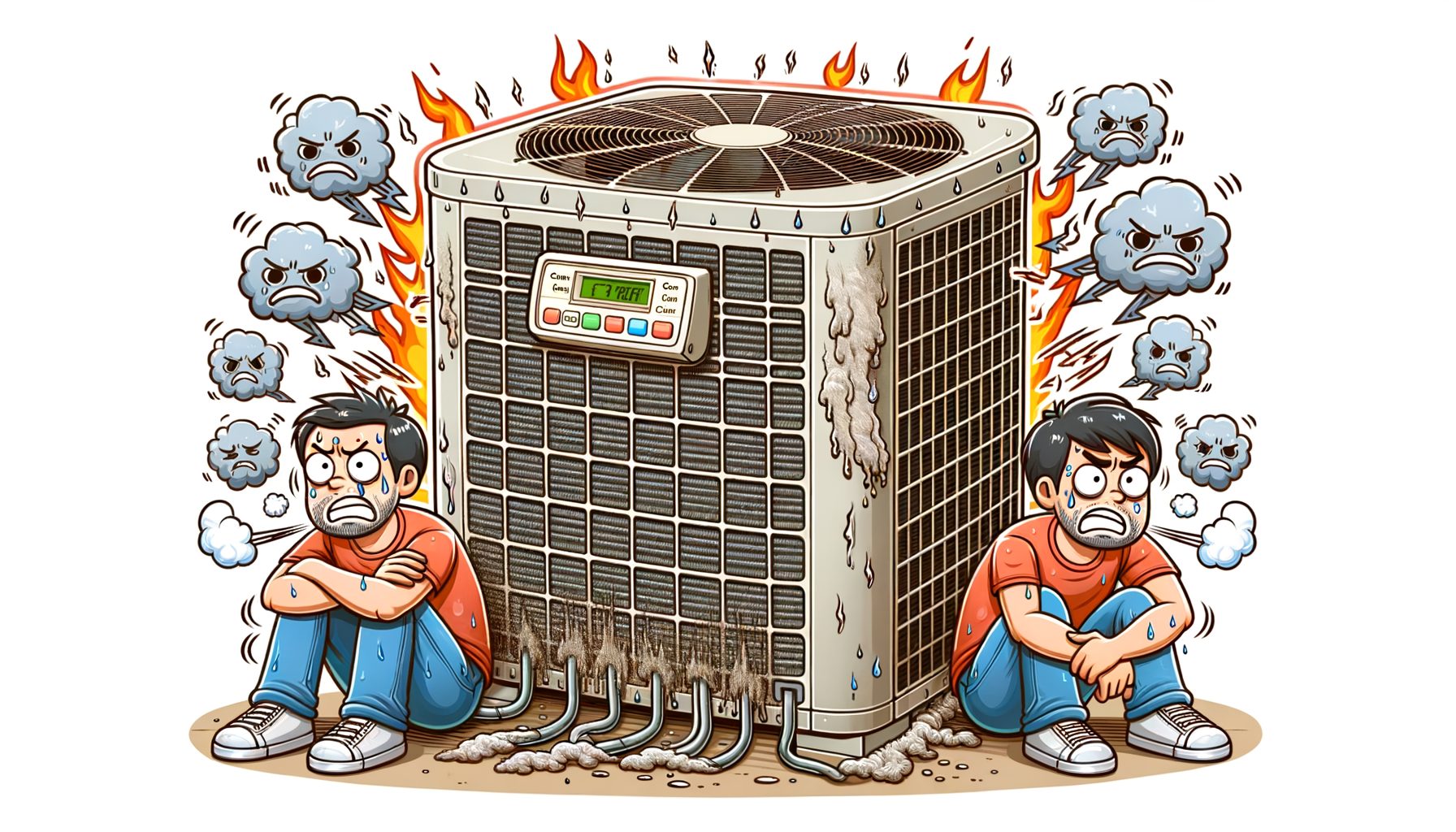
Most people treat their air conditioner like a “set it and forget it” machine—until it smells musty, runs loud, or suddenly quits on the hottest day of the year. Hidden in plain sight, neglected AC cleaning and maintenance quietly erode indoor air quality, waste energy, and shorten equipment life. Noticing weaker cooling, rising bills, or worse allergies at home? AC cleaning and maintenance could be the missing fix. Stick with this for a few minutes to see what happens inside a neglected unit, the real health and money risks, and the practical steps that protect your comfort, your wallet, and your air.
The invisible problem: what happens inside a neglected AC
More than a box that blows cold air, your AC is a system that breathes your indoor environment over and over. Return air carries dust, skin flakes, pet dander, pollen, and volatile organic compounds into the filter and across the evaporator coil. When filters are overdue or sized poorly, more particles bypass into the coil fins and condensate pan. With moisture present, a biofilm can form—think of it as an ultra-thin, sticky layer that traps even more debris. Such buildup restricts airflow and insulates heat-exchanging surfaces, forcing your AC to work harder to deliver the same cooling. You may not notice the change overnight. The system does: longer run times, louder fans, higher temperatures at critical components.
Outdoors, the condenser coil faces a different kind of grime—cottonwood, leaves, soot, street dust. When the outdoor coil is dirty, the compressor must push against higher pressures to reject heat. That extra strain means higher amps, more heat, and accelerated wear. Over time, neglected coils can spark symptoms that seem minor at first—uneven room temperatures, a faint odor at startup, or water drips near the air handler from a clogged drain. Early signals, all pointing to lost efficiency and slipping humidity control.
Humidity affects comfort as much as temperature. A clean, well-tuned AC doesn’t just cool; it dehumidifies. If the coil surface is fouled, air glides by with less contact, and moisture removal drops. Result: the thermostat might read the right temperature, but the air feels clammy. That “sticky” feeling often nudges people to set the thermostat lower, masking a maintenance problem while raising energy use. In short, neglect creeps in slowly, often disguised as normal aging. Routine AC cleaning and maintenance stop the slide before it becomes a breakdown.
Health risks you can’t see: mold, bacteria, and indoor air quality
Indoor air quality (IAQ) matters because you spend most of your time indoors, and your AC circulates the air you breathe. When filters, coils, and drain pans are dirty, the system can recirculate allergens like pollen and dust, plus particles that irritate eyes, nose, and throat—especially for kids, older adults, and anyone with asthma or allergies. While a residential AC is not a source of outdoor pollutants, it can amplify problems by distributing what’s already present. The U.S. Environmental Protection Agency notes that indoor air can be more polluted than outdoor air in some cases, and moisture problems can worsen air quality issues. See EPA guidance on indoor air quality and HVAC considerations: https://www.epa.gov/indoor-air-quality-iaq.
Moisture is the pivot point. An AC that drains poorly or runs with a fouled coil can keep parts of the system damp longer. That dampness encourages mold growth on surfaces like the drain pan and nearby insulation. The U.S. Centers for Disease Control and Prevention advises that mold exposure may trigger nasal stuffiness, wheezing, or skin irritation in sensitive people, and those with asthma might experience more symptoms: https://www.cdc.gov/mold. If you notice a persistent musty smell during cooling cycles, consider it a cue to check the drain, filter, and coil cleanliness, as well as humidity levels.
What’s interesting too, residential split ACs differ from cooling towers in large buildings; the latter can be a risk for Legionella if not maintained, but typical home ACs operate in a closed loop and do not aerosolize water the same way. Still, any standing water in a drain pan can support microbial growth and unpleasant odors. Good maintenance—keeping filters clean, ensuring proper drainage, sealing duct leaks, and maintaining appropriate indoor humidity (generally 40–60%)—reduces these risks. If you see visible mold growth inside the air handler or smell strong mustiness that doesn’t go away after cleaning drains and replacing filters, consider a professional inspection. Combining smart filtration (MERV rating appropriate for your system), proper ventilation, and routine AC cleaning and maintenance is one of the simplest ways to support healthier air at home.
The money drain: higher bills, lower efficiency, and your carbon footprint
Energy waste from a neglected AC shows up quietly on your utility bill. The U.S. Department of Energy reports that replacing a dirty filter with a clean one can lower your air conditioner’s energy use by 5–15%. Source: https://www.energy.gov/energysaver/maintaining-your-air-conditioner. Coil fouling and poor airflow compound the penalty by forcing longer runtimes and higher compressor pressure. Over a cooling season, even a modest efficiency loss adds up to significant costs—plus extra carbon emissions if your electricity comes from fossil fuels. Globally, cooling already accounts for nearly 10% of building electricity use, according to the International Energy Agency: https://www.iea.org/reports/the-future-of-cooling. That means small efficiency gains at home scale to big impacts worldwide.
Well, here it is: a simple, illustrative scenario to put numbers on it. Assumptions: a 3-ton (36,000 Btu/h) central AC running 1,200 hours per year; baseline seasonal efficiency equivalent to SEER 14; electricity at $0.15/kWh; and a 15% energy penalty from neglected maintenance. Your rates and climate may differ, but the comparison shows the direction and magnitude.
| Scenario | Seasonal energy use (kWh) | Approx. cost and CO2 |
|---|---|---|
| Clean filter and coils | ~3,085 kWh | $463; ~1,390 kg CO2 (at 0.45 kg/kWh) |
| Neglected (15% loss) | ~3,548 kWh | $532; ~1,597 kg CO2 |
| Difference | +463 kWh | +$69; +~207 kg CO2 |
Even if your local electricity is cleaner or cheaper, wasted energy is still wasted money—and it’s avoidable. A basic annual tune-up (often $100–$300 depending on region) can pay for itself in one or two seasons through lower bills and fewer service calls. If you want to go further, ask a qualified technician about correct refrigerant charge, airflow balance, and duct sealing—issues that can quietly sap efficiency. For context on average electricity carbon intensity by country or the global average, see Our World in Data: https://ourworldindata.org/electricity-mix. Taken together, regular AC cleaning and maintenance is a high-leverage habit: you cut costs, reduce emissions, and get better comfort all at once.
Reliability and lifespan: why small maintenance prevents big failures
AC failures rarely come out of nowhere. Most start as small, fixable issues: a clogged drain that overflows and triggers a safety switch; a matted condenser coil that hikes head pressure and overheats the compressor; a weak capacitor working overtime because the fan motor runs hot in dirty airflow; or an iced evaporator coil caused by a filthy filter. Components get pushed beyond their comfort zone, and heat is the enemy of electronics and motors. Over months and years, the stress shortens lifespan and raises the chance of a peak-season breakdown—when technicians are busiest and parts take longer to arrive.
Then this: routine maintenance breaks that chain. A practical, homeowner-friendly plan looks like the following:
– Every 30–60 days in cooling season: check and replace the filter as needed. Use a MERV rating your system can handle; too restrictive can starve airflow. Your manufacturer’s manual is the best guide, or consult a pro.
– Each spring: gently hose off the outdoor condenser coil (from the inside out if the cabinet allows) to remove cottonwood and dust. Power off first. Avoid bending fins.
– Each season: clear the condensate drain with a safe cleaning method (for example, a wet/dry vacuum at the outside drain line) and ensure the trap is intact.
– Annually: schedule a professional tune-up. A qualified tech will clean the evaporator (if accessible), verify refrigerant charge, measure superheat/subcooling, test capacitors and contactors, check blower amps, tighten connections, and confirm temperature split and airflow.
These steps don’t just prevent downtime; they also protect your warranty. Proof of maintenance may be required by some manufacturers for certain claims. Costs vary by region and system type, but a typical residential tune-up often ranges from $100 to $300, while emergency repairs on a failed compressor can run into the thousands. If you’re curious about maintenance best practices and filtration, ASHRAE offers guidance on HVAC cleanliness and disinfection strategies: https://www.ashrae.org/technical-resources/filtration-and-disinfection-fa. In short, an hour or two per season and one professional visit a year is a small investment that keeps your AC reliable, efficient, and ready for heat waves.
Q: How often should I replace my AC filter?
A: Check monthly during heavy use and replace at least every 1–3 months, or sooner if visibly dirty or if you have pets/allergies. Follow your system’s guidelines so you don’t restrict airflow.
Q: What are the signs my AC needs cleaning or service?
A: Musty smells at startup, weak airflow, longer run times, higher bills, visible dust on vents, water near the air handler, icing on refrigerant lines, or unusual noises are all common clues.
Q: Can I do AC cleaning myself?
A: Yes, for basics: replace filters, clear the drain, gently rinse the outdoor coil, and keep debris away from the condenser. Leave refrigerant, electrical testing, coil deep-cleaning, and airflow balancing to a licensed pro.
Q: Do UV lights help?
A: UV-C lights can limit microbial growth on the coil and pan, helping keep them cleaner. They are a supplement—not a substitute—for proper filtration, humidity control, and regular maintenance.
Conclusion and next steps
Here’s the bottom line: neglect quietly steals comfort, money, and healthy air. Inside a dirty system, airflow drops, coils foul, humidity control slips, and components overheat. All of that adds up to higher bills, more emissions, and a greater chance your AC will fail at the worst possible time. The good news is that AC cleaning and maintenance is straightforward, affordable, and incredibly effective. By keeping filters fresh, coils clean, drains clear, and scheduling one professional checkup a year, you’ll protect your investment, breathe easier, and keep your home comfortable even during heat waves.
Ready to act? Make a simple two-part plan today:
– Block 20 minutes this weekend to replace the filter, vacuum returns, clear the condensate drain, and gently rinse the outdoor coil (power off first).
– Book a professional tune-up within the next 7–14 days to verify refrigerant charge, confirm airflow, and catch any early component wear. Ask the technician to show you the coil condition and drain performance so you can see the difference maintenance makes.
Want to go a level deeper? Review indoor air quality basics from the EPA (https://www.epa.gov/indoor-air-quality-iaq), check energy-saving maintenance tips from the U.S. Department of Energy (https://www.energy.gov/energysaver/maintaining-your-air-conditioner), and explore global cooling impacts with the International Energy Agency (https://www.iea.org/reports/the-future-of-cooling). A few small habits—filter checks, seasonal cleaning, and one annual visit—deliver year-round dividends in comfort and reliability.
Start today, while everything still works. Your future self will thank you when the first heat wave hits and your system runs quietly, efficiently, and without drama. Set a reminder, make the call, and take control of your air. Ready to breathe easier and spend less—what’s the first step you’ll tackle this week?
Sources:
– U.S. Department of Energy – Maintaining Your Air Conditioner: https://www.energy.gov/energysaver/maintaining-your-air-conditioner
– U.S. EPA – Indoor Air Quality: https://www.epa.gov/indoor-air-quality-iaq
– CDC – Mold: https://www.cdc.gov/mold
– ASHRAE – Filtration and Disinfection FAQs: https://www.ashrae.org/technical-resources/filtration-and-disinfection-fa
– International Energy Agency – The Future of Cooling: https://www.iea.org/reports/the-future-of-cooling
– Our World in Data – Electricity Mix and Emissions: https://ourworldindata.org/electricity-mix