
When your air conditioner struggles on a hot afternoon, the culprit is often invisible: refrigerant (Freon). That specialized fluid acts as the lifeblood of your home HVAC cooling system, quietly hauling heat out of your rooms and dumping it outdoors. If the charge is low, the wrong type is used, or the system isn’t maintained, you’ll feel it as weak cooling, higher energy bills, or a compressor failure that costs thousands. Here’s the good news: understand how refrigerant works—and treat it right—and you’ll stay comfortable, cut costs, and extend equipment life.
The real problem refrigerant solves (and why your AC can’t cool without it)
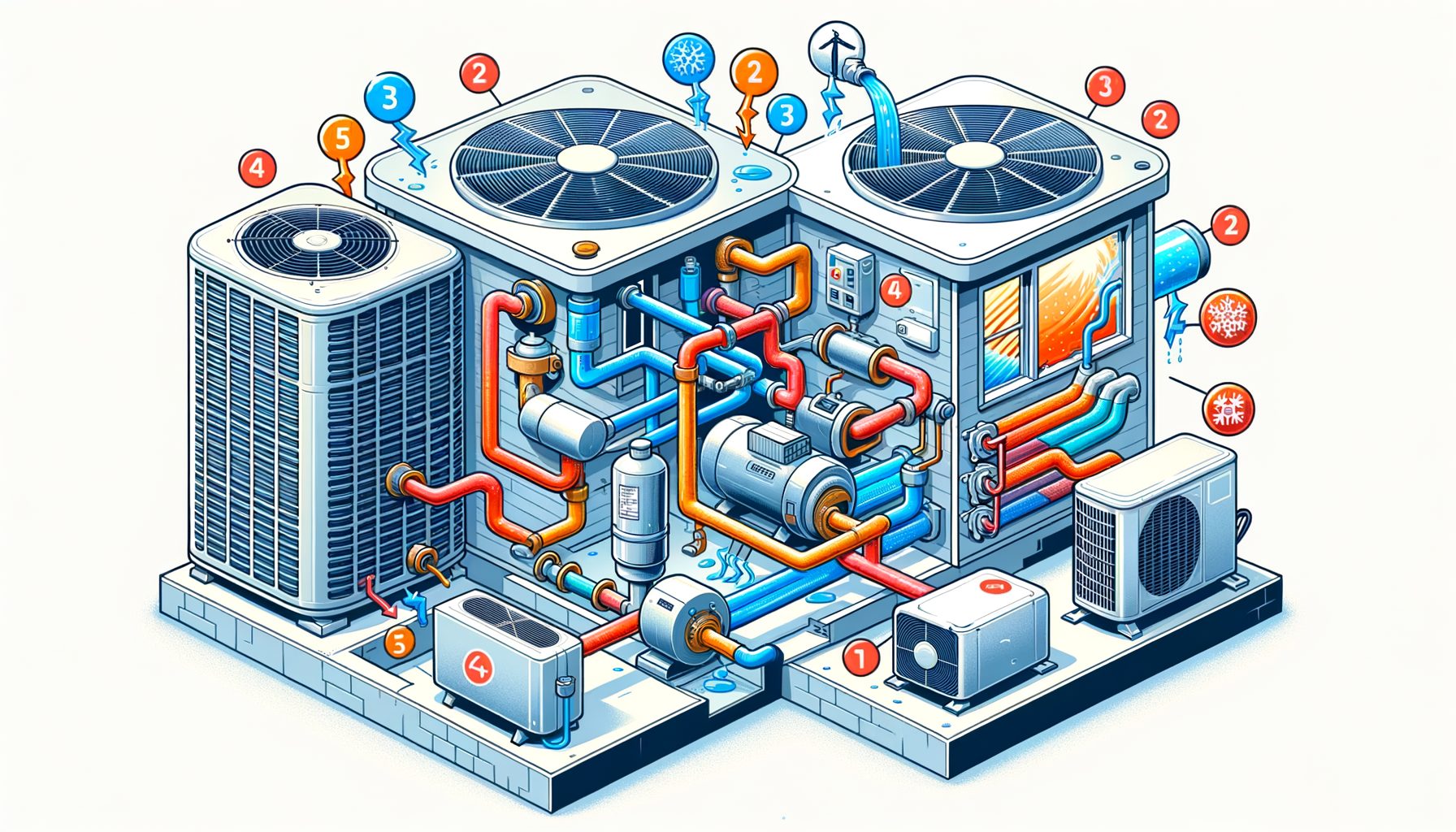
Air conditioners don’t “create” cold. They move heat. Refrigerant provides the medium that makes that heat transfer possible. Inside your HVAC cooling system, it continually cycles through four key components: the compressor, condenser coil, expansion device, and evaporator coil. In the indoor evaporator coil, low-pressure liquid refrigerant evaporates into a gas and absorbs heat from indoor air as a fan blows across the coil. The warmed vapor travels to the outdoor compressor, where it’s squeezed to a much higher pressure and temperature. Next, hot, high‑pressure gas flows through the outdoor condenser coil and releases heat to the outside air. Afterward, the expansion device drops the pressure, the refrigerant cools, and the cycle begins again.
When refrigerant levels are correct and airflow is strong, the loop runs efficiently, steadily, and quietly. But if the refrigerant (sometimes called Freon, a brand name) is undercharged due to a leak, the evaporator can’t absorb enough heat. You’ll notice longer run times, tepid supply air, and possibly an evaporator coil that freezes into a block of ice. Overcharging is just as bad: too much refrigerant can flood the compressor with liquid, raise pressures, increase power draw, and shorten equipment life. Studies cited by the U.S. Department of Energy show that an improper charge can cut cooling efficiency by 5–20%—a penalty you feel every month on your utility bill. In real-world service visits, technicians routinely find airflow issues and charge problems paired together, both crushing performance.
Comfort matters, too. Refrigerant pressures set the evaporator coil’s temperature. If that coil isn’t cold enough, humidity removal suffers. You’ll feel clammy even when the thermostat matches your setpoint. That’s why a correct refrigerant charge isn’t just a technicality—it’s central to comfort, energy savings, and equipment reliability.
Refrigerant types, environmental impact, and the global transition
Not all refrigerants are alike. The industry has shifted from ozone‑depleting CFCs and HCFCs (like R‑22) to HFCs (like R‑410A) and now toward lower global warming potential (GWP) options such as R‑32 and A2L blends like R‑454B. For homeowners, the type in your system affects service availability, cost, safety requirements, and regulatory timelines. If you own an older unit that uses R‑22, it has been phased out in most countries under the Montreal Protocol. Servicing such systems can be expensive because supplies are limited. Many current systems use R‑410A, but it’s part of ongoing HFC phasedowns under policies like the U.S. AIM Act and the EU’s F‑gas Regulation. Newer equipment increasingly ships with R‑32 or R‑454B to deliver similar performance with much lower climate impact.
Safety classification matters, too. ASHRAE Standard 34 assigns refrigerants to classes based on toxicity and flammability. R‑22 and R‑410A are A1 (lower toxicity, no flame propagation), while R‑32 and R‑454B are A2L (lower toxicity, mildly flammable). Lower GWP is enabled by A2L refrigerants, but updated installation practices and code compliance are required. Your contractor should follow manufacturer instructions and local regulations when installing or retrofitting systems using A2L refrigerants.
Here’s a quick at‑a‑glance comparison:
| Refrigerant | ASHRAE Class | Approx. ODP | Approx. GWP (100y) | Notes |
|---|---|---|---|---|
| R‑22 | A1 | ~0.055 | ~1810 | Phased out; legacy equipment only; limited supplies |
| R‑410A | A1 | 0 | ~2088 | Common in 2006–2024 units; subject to HFC phasedown |
| R‑32 | A2L | 0 | ~675 | High efficiency; mildly flammable; widely adopted in Asia/EU |
| R‑454B | A2L | 0 | ~466 | Newer R‑410A replacement; similar performance with lower GWP |
For homeowners, the practical takeaways are simple: match the refrigerant to the equipment it was designed for, don’t mix types, and plan ahead for the HFC transition when replacing systems. To dig deeper, see the U.S. EPA’s HFC phasedown overview at epa.gov/climate-hfcs-reduction, the EU F‑gas policies at climate.ec.europa.eu, and Montreal Protocol resources at ozone.unep.org.
Efficiency, maintenance, and troubleshooting: keeping your refrigerant loop healthy
You don’t have to be an HVAC engineer to protect your refrigerant loop. A few practical habits and timely checks go a long way. First, airflow is king. Even a perfectly charged system underperforms if ducts leak or filters are clogged. Replace filters on schedule (often every 1–3 months), keep supply and return vents open and unobstructed, and have ducts sealed if you suspect leaks. Restricted airflow lowers evaporator temperature, which can freeze the coil and mimic low refrigerant symptoms.
Second, keep coils clean and straight. Rinse outdoor condenser fins with low-pressure water and a coil‑safe cleaner at least once a season; gently comb bent fins if needed. Indoors, ensure the condensate drain is clear—overflows and slime reduce efficiency and can trigger safety shutdowns. Cleaner coils transfer heat better, translating to shorter run times and lower bills.
Third, bring in a certified technician for annual service. Superheat and subcooling should be verified, static pressure measured, temperature split checked, and leak tests performed if indicated. In field audits, technicians commonly find systems off by a few degrees of subcooling or superheat; correcting that can recover notable efficiency. When leaks occur, proper repair involves locating the leak (often at flare connections, braze joints, or coil end turns), fixing it, evacuating the system to deep vacuum, and then weighing in the exact factory charge. Simply “topping off” without leak repair is a temporary patch and often illegal if it results in continued emissions.
If your AC is underperforming, try this quick triage:
– Warm air at vents and short cycling: check the filter, thermostat settings, and outdoor coil cleanliness.
– Ice on the indoor coil or refrigerant lines: turn the system off, switch the fan to “On” to thaw, and call a pro—could be low airflow or a refrigerant issue.
– Higher‑than‑normal energy bills: schedule a tune‑up to verify charge and airflow; small deviations cause big cost swings over a season.
– Hissing or oily residue at fittings: potential leak; shut down the system and book service.
For more homeowner‑focused guidance, review Energy Saver tips at the U.S. Department of Energy: energy.gov/energysaver/central-air-conditioning and HVAC best practices via ENERGY STAR at energystar.gov. If you’re evaluating replacements, compare matched systems in the AHRI Directory at ahridirectory.org.
Safety, climate, and what’s next for home cooling
Refrigerants are critical to modern comfort, but they must be handled responsibly. Venting refrigerant is illegal in many regions, and working on charged systems requires certification. Even A1 refrigerants can displace oxygen in confined spaces, and A2L refrigerants have mild flammability that demands code‑compliant installation, proper ventilation, and spark‑safe work practices. The refrigerant circuit should never be opened by a homeowner; professionals with recovery machines, vacuum pumps, scales, and gauges designed for the specific refrigerant type must do that work.
On the climate front, the momentum is clear: lower‑GWP refrigerants are coming fast. Expect more equipment using R‑32 and R‑454B, as well as growth in heat pumps that both heat and cool efficiently. Proper design—right‑sizing the unit, using high‑SEER2 or regionally equivalent high‑efficiency ratings, and installing smart thermostats—can amplify the benefits of these refrigerants. And because many grids are decarbonizing, every kilowatt‑hour you save via correct charge and maintenance reduces lifecycle emissions even further.
Looking ahead, engineers are exploring ultra‑low‑GWP blends, expanded use of CO₂ (R‑744) in specific applications, and system designs with microchannel coils that use less refrigerant overall. Yet the homeowner action plan remains consistent: maintain airflow, keep coils clean, fix leaks properly, and choose replacements that balance efficiency, safety class, and regulatory support in your region. For fundamentals on safety classifications, see ASHRAE resources: ashrae.org/technical-resources/standards-and-guidelines, and for policy direction, follow national environmental agencies and your local building code updates.
Q&A: quick answers about refrigerant and home AC
Q1: Is “Freon” the same as refrigerant?
A: “Freon” is a legacy brand name often used generically. Your system might use R‑410A, R‑32, R‑454B, or another specific refrigerant. Always check the nameplate on the outdoor unit.
Q2: Can I add refrigerant myself?
A: No. Handling, recovering, and charging refrigerant typically requires certification and specialized tools. DIY charging can damage the compressor, void warranties, and violate regulations.
Q3: How do I know if my AC is low on refrigerant?
A: Signs include longer run times, weak cooling, ice on the indoor coil or suction line, and higher energy bills. A technician confirms by measuring superheat/subcooling and pressures, and by checking for leaks.
Q4: Is switching refrigerant types a good idea for an older unit?
A: Usually no. Systems are engineered for a specific refrigerant and oil. “Drop‑in” replacements often compromise performance or reliability. Plan for a properly matched replacement if your unit is near end‑of‑life.
Q5: Do lower‑GWP refrigerants cool as well as older ones?
A: Yes—when equipment is designed for them. Modern units using R‑32 or R‑454B can match or exceed the performance of R‑410A systems, often with improved efficiency.
Conclusion: make refrigerant work for you—comfort, savings, and sustainability
We’ve explored how refrigerant (Freon) powers your home HVAC cooling system, why correct charge and airflow matter, the major refrigerant types and their environmental footprint, and how smart maintenance prevents costly failures. The core idea is simple: refrigerant moves heat. Keep the loop clean, tight, and tuned, and your AC cools faster, dehumidifies better, and uses less energy. Neglect it—dirty coils, leaky lines, or guesswork charging—and you’ll pay more for less comfort while risking early equipment failure.
Start with what you control. Replace or wash filters on schedule. Keep outdoor coils clean and clear of debris. Make sure supply and return vents are open and the condensate drain is unclogged. Then schedule a professional tune‑up before peak season to verify superheat/subcooling, check for leaks, and confirm that your system’s refrigerant type and charge match the manufacturer’s specifications. If your unit is aging or uses a phased‑out refrigerant, talk to a qualified contractor about a replacement that uses a lower‑GWP refrigerant like R‑32 or R‑454B and carries a high efficiency rating. Ask for an AHRI‑matched system and insist on a proper load calculation rather than rule‑of‑thumb sizing.
Next step: pick a date on your calendar—this week—to book a maintenance check. Share this guide with a family member or housemate and make a quick checklist: filter, coils, airflow, drain, pro tune‑up. If replacement is on the horizon, research models in the AHRI Directory and read your region’s guidance from agencies like the EPA or EU Commission so you choose a future‑proof refrigerant and a safe, code‑compliant installation.
Comfort, savings, and sustainability can live in the same system when the refrigerant loop is respected. Treat your AC like the finely tuned heat‑moving machine it is, and it will quietly deliver cool, dry air all summer long. Ready to take control of your comfort—and your energy bills—starting today? What’s the first task you’ll check off your HVAC list?
Sources and further reading
– U.S. EPA HFC phasedown (AIM Act): https://www.epa.gov/climate-hfcs-reduction
– EU F‑gas policy overview: https://climate.ec.europa.eu/eu-action/fluorinated-greenhouse-gases_en
– UNEP Ozone Secretariat (Montreal Protocol): https://ozone.unep.org
– U.S. DOE Energy Saver: Central Air Conditioning: https://www.energy.gov/energysaver/central-air-conditioning
– ENERGY STAR Heating & Cooling guidance: https://www.energystar.gov/campaign/heating_cooling
– ASHRAE Standards and Guidelines (incl. safety classifications): https://www.ashrae.org/technical-resources/standards-and-guidelines
– AHRI Directory of Certified Product Performance: https://www.ahridirectory.org