
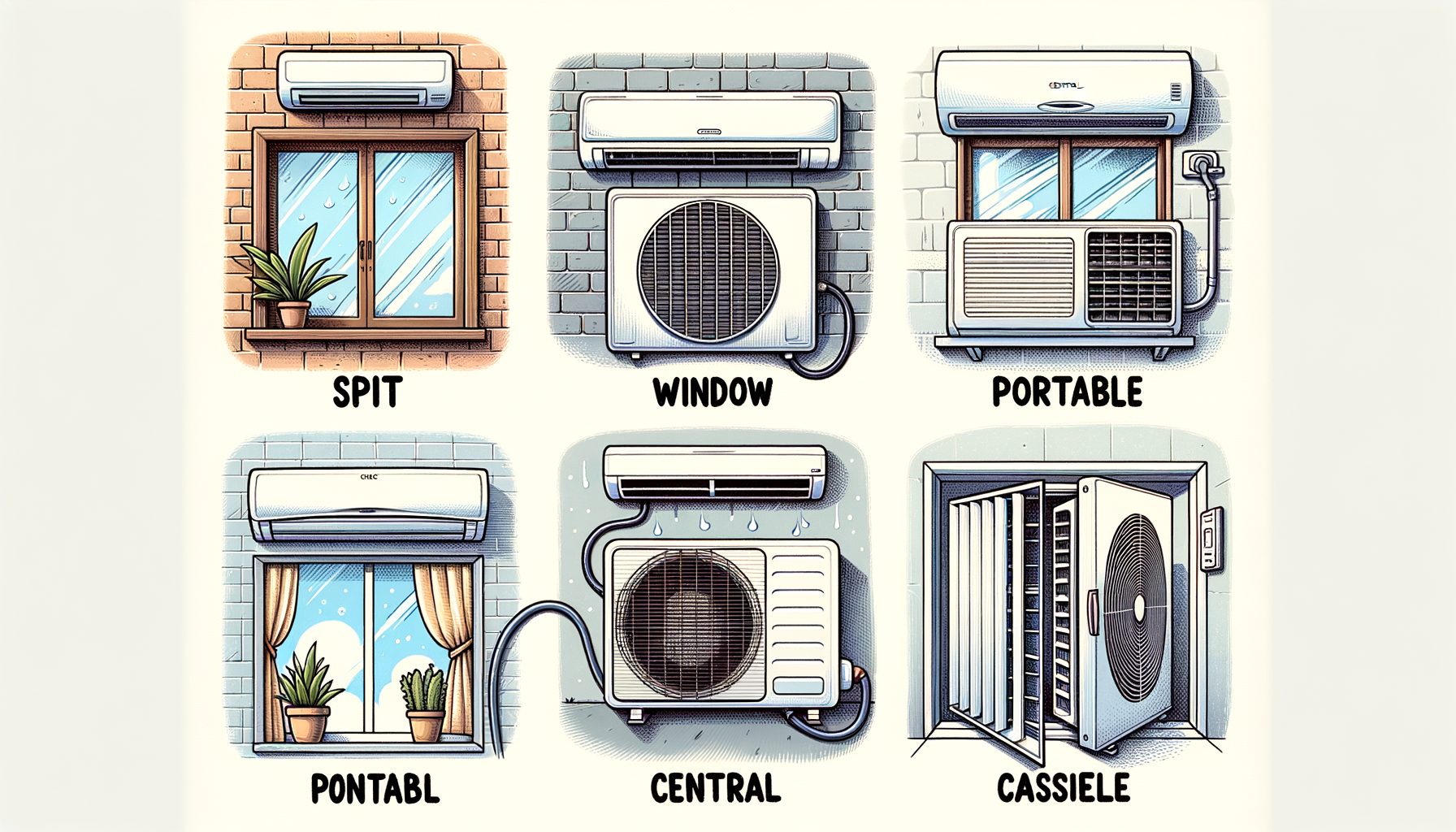
You’re hot, your place is stuffy, and electricity prices keep rising. You open a shopping app and face a wall of options—split, window, portable, central, cassette. Which one actually fits your space, your budget, and your climate? Here’s a plain-language guide to the major air conditioner types so you can choose with confidence. We’ll cover Split, Window, Portable, Central, and Cassette units, compare real pros and cons, and share simple sizing tips. If you’ve ever searched “best air conditioner types” and felt overwhelmed, you’re in the right place.
The real problem: choosing the right air conditioner type for your space
The biggest mistake people make is buying an air conditioner based on price or a friend’s recommendation—not on the room’s actual needs. That leads to wasted energy, uneven cooling, noise, and in some cases, higher humidity or mold risk. The right choice depends on five things: the size and layout of your space, whether you rent or own, your climate (dry or humid), the electrical and structural realities of your building, and your budget for installation versus monthly energy bills. When you match the air conditioner type to these factors, you get better comfort and lower costs.
Begin with sizing. In the U.S., a rough guide is 20 BTU per square foot of room area, then adjust for sunlight, occupancy, and heat sources. For example, a 300 sq ft (28 m²) bedroom typically needs about 6,000 BTU, but if it’s sun-soaked or doubles as a gaming setup with multiple devices, bump capacity up a notch. In Europe and many other regions, look for cooling capacity listed in watts or kW (1 kW ≈ 3,412 BTU). Undersizing leads to endless running and poor comfort; oversizing short-cycles, wastes energy, and can leave air clammy because it doesn’t run long enough to dehumidify effectively.
Next, decide on permanence and aesthetics. Renters often prefer window or portable units because they’re DIY-friendly and reversible. Homeowners or long-term tenants might invest in a ductless split system or a central system for a cleaner look and higher efficiency. If you have a suspended ceiling and want near-invisible cooling with strong air distribution, cassette units are compelling, especially for open-plan areas or stylish shops and cafes.
Finally, factor in energy efficiency, maintenance, and noise. Ductless split systems and high-efficiency central systems usually win on energy use. Window and portable units can be cost-effective for small rooms or temporary setups. Maintenance matters too: filters need regular cleaning, condensate drains need checking, and outdoor coils should be kept clear. Noise can make or break comfort—splits are generally the quietest indoors; portables and window units are louder because the compressor is inside the room.
Quick checklist to narrow your choice fast:
- Room size and sun exposure: calculate capacity using BTU or kW guidelines.
- Ownership: renter (window/portable) vs owner (split/central/cassette).
- Climate: humid areas benefit from systems with strong dehumidification (splits, central with proper sizing).
- Existing ducts: if you already have ductwork, central may be efficient to upgrade.
- Noise and looks: splits and cassettes are quieter and cleaner-looking.
Well, here it is: a comparison you can skim.
| Type | Best Area Size | Typical Efficiency | Indoor Noise | Install Complexity | Upfront Cost (USD) | Key Pros | Key Cons |
|---|---|---|---|---|---|---|---|
| Split (Ductless) | Single rooms to small homes | SEER2 ~18–25 | Very low (≈19–45 dB) | Pro install | ≈$2,000–$6,000 per zone | Efficient, quiet, zoned | Higher upfront, wall units visible |
| Window | Small–medium rooms | CEER ~9–12 | Moderate–high (≈50–60+ dB) | DIY | ≈$150–$600 | Low cost, easy install | Blocks window, noisier |
| Portable | Small rooms, temporary | CEER ~8–10; SACC rated | High (≈50–70 dB) | DIY | ≈$250–$700 | Flexible, renter-friendly | Least efficient, floor space |
| Central (Ducted) | Whole-home | SEER2 ~13.4–21+ | Low in rooms (if ducts good) | High (pro + ducts) | ≈$5,000–$14,000+ | Even comfort, clean look | Needs ducts, higher cost |
| Cassette | Open rooms, retail/offices | Similar to split | Low (≈25–45 dB) | Pro + ceiling work | ≈$2,500–$8,000 per zone | Sleek, 4‑way airflow | Requires false ceiling |
For deeper sizing and efficiency guidance, check official resources like U.S. Department of Energy’s room AC tips (Energy Saver) and ENERGY STAR efficiency criteria (ENERGY STAR).
Split air conditioners: efficient, quiet, and flexible
Split air conditioners—especially ductless mini-splits—are the go-to choice for people who want quiet operation, high efficiency, and room-by-room control. A split system separates the noisy compressor outdoors from a sleek indoor unit mounted on a wall, floor, or ceiling. Many modern models use inverter technology, which adjusts compressor speed to match the exact cooling demand. That means fewer temperature swings, better humidity control, and lower energy use. Whisper-quiet sound levels—often under 30 dB at low fan speeds—can be achieved, and SEER2 ratings frequently land in the high teens to mid‑20s.
Where splits shine: targeted rooms (bedrooms, home offices, converted garages), apartments where running ducts isn’t feasible, or multi-zone setups in homes with varied usage. Multi-split systems connect several indoor units to one outdoor unit, allowing precise control over different rooms. What’s interesting too is that many ductless heat pump versions provide efficient heating in winter and cooling in summer—handy for mild to cold climates if you choose a low-ambient model.
Expect installation to be handled by a qualified professional who mounts the units, runs refrigerant lines, and takes care of electrical connections. While upfront costs are higher than window or portable units, operating costs are usually lower due to superior efficiency and zoned control. Maintenance is simple: clean or wash the indoor filters monthly during heavy use, keep the outdoor condenser clear of leaves and debris, and schedule periodic professional service to check refrigerant charge and condensate drainage. Also look at refrigerant type; many newer models use R32, which has a lower global warming potential than older R410A, while delivering strong performance.
Real-world example: a 20 m² (215 sq ft) home office in a humid coastal city used to rely on a portable AC. It cooled but left the air damp and loud. After switching to a 12,000 BTU inverter mini-split, indoor noise dropped dramatically, the relative humidity stabilized around 50–55%, and the monthly cooling portion of the electric bill fell by roughly 20–30% compared with the old setup. If you value comfort and peace, split systems are hard to beat. To compare efficiency and capacities before buying, consult the AHRI directory and ENERGY STAR’s Most Efficient lists (Most Efficient).
Window vs. portable ACs: renter-friendly cooling explained
Window and portable air conditioners are the fastest way to cool a room without calling an installer. For renters or students, they’re often the only practical option. A window AC sits in a window frame (or a wall sleeve), exhausting hot air directly outside. A portable AC sits on the floor and uses one or two hoses through a window kit to vent heat outdoors. Both are DIY-friendly and relatively affordable—but they differ in performance and noise.
Window units are generally more efficient and quieter than portable units at the same capacity. Because the compressor is still in the window, you will hear it, but modern models include features like inverter compressors and variable-speed fans that reduce sound and power draw. Look for CEER ratings (Combined Energy Efficiency Ratio) to compare efficiency across models; higher is better. For sizing, typical window units range from 5,000 to 14,000 BTU—good for bedrooms, living rooms, or small studios. Then this: seal gaps with the foam kit to prevent hot air leaks and to improve both comfort and efficiency. Safety tip: use a proper support bracket if required by your building or local code.
Portable units are the most flexible—you can roll them to another room, which is great for renters or for spaces where drilling or permanent mounting isn’t allowed. However, single-hose models pull in unconditioned air from the rest of the home (or even outdoors), creating negative pressure that reduces net cooling efficiency. Dual-hose portables perform better by separating intake and exhaust air paths. Always check the SACC rating (Seasonally Adjusted Cooling Capacity), which better reflects real-world performance than the older “rated BTU” numbers. Expect more noise compared with window units and splits, since the compressor operates inside the room.
Upkeep for both is straightforward: clean filters every few weeks in peak season, ensure the condensate drains properly (some portables use self-evaporation; others need manual draining), and keep the coils dust-free. Cost-wise, window units usually run $150–$600 depending on size and features; portables range from $250–$700. For UL-listed, efficient, and quieter models, browse ENERGY STAR’s room AC guidance and recommendations (ROOM ACs). Bottom line: choose window if you can install it; choose portable if you need mobility or your window can’t safely hold a unit.
Central air conditioning: whole-home comfort and efficiency
Central AC cools an entire home through ductwork. If your house already has ducts for forced-air heating, upgrading or replacing the central air conditioner can be a smart path to efficient, seamless comfort. Modern central systems come with SEER2 ratings that commonly range from 13.4 to 21 or higher. When sized and installed correctly, they deliver even temperatures across rooms, better humidity control, and a clean aesthetic (no indoor units on the walls). Pairing with a smart thermostat and zoning dampers can optimize comfort and save energy by conditioning only the spaces you use.
Design matters. Proper sizing should follow standardized load calculations (in the U.S., ACCA Manual J), and duct design should follow Manual D to ensure airflow is balanced. Oversized units short-cycle and under-dehumidify; undersized ones struggle on the hottest days. Duct leakage is a silent energy drain—typical homes can lose 20–30% of air through leaks, according to efficiency studies. Sealing ducts and adding insulation can cut energy use and improve comfort. For clean air, aim for MERV 11–13 filters if your system can handle the pressure drop, and consider adding balanced ventilation or energy recovery where climate and building design warrant it.
Costs vary widely by region, home size, and duct condition, but a full central AC installation often ranges from $5,000 to $14,000+. If you also need new ductwork, the cost goes up. Many homeowners now choose central heat pumps instead of AC-only units because they provide efficient heating in winter and cooling in summer, reducing or replacing the need for gas or electric resistance heat. If you live in a cold climate, look for cold-climate heat pump models with strong low-ambient performance. For credible guidance and contractor standards, see ACCA resources (ACCA) and ENERGY STAR HVAC tips (Heating & Cooling).
Real example: a 2,000 sq ft (186 m²) home with leaky ducts replaced an aging 10 SEER system with a SEER2 17 heat pump and sealed the ductwork. The result: more even temperatures, indoor humidity dropping from 60%+ to 50–55% on summer afternoons, and cooling energy use reduced by double digits. Central systems are a strong long-term investment when they’re sized right, ducts are tight, and controls are smart.
Cassette AC units: sleek airflow for open rooms and businesses
Cassette air conditioners are a specialized form of split or multi-split system with the indoor unit recessed in the ceiling. They’re popular in retail, restaurants, co-working spaces, and stylish apartments with suspended ceilings. Cassette units typically offer four-way airflow, distributing cool air evenly across larger, open-plan areas without the visual presence of a wall-mounted unit. If you want “invisible” cooling with strong throw and good mixing, cassettes are compelling.
When you plan an install, consider ceiling depth (you need enough plenum space), structural support, and a route for condensate drainage. Many cassettes include a small built-in condensate pump, but that pump needs periodic maintenance to avoid clogs and leaks. Because these are still split systems at the core, efficiency is similar to their wall-mounted cousins: inverter compressors, variable fan speeds, and precise temperature control are standard on quality models. Noise is typically low in occupied spaces—often comparable to quiet office ambiance—because the compressor is outdoors and the indoor fan is well isolated.
Where do cassettes make the most sense? Open living rooms, large bedrooms with limited wall space, boutiques, clinics, and classrooms with suspended ceilings. They also integrate well with multi-zone setups, where one outdoor unit serves several indoor cassettes or a mix of cassette and wall units. Costs vary, but expect roughly $2,500–$8,000 per zone depending on capacity, brand, and local labor rates—higher than a basic wall-mounted split due to ceiling work, but similar on efficiency. Keep filters clean, check the drain pan and pump, and schedule annual service to protect your investment. To compare technologies (including VRF/VRV multi-split setups used in larger buildings), explore manufacturer data and independent efficiency databases like AHRI (AHRI Directory).
Q: How do I quickly size an AC for my room?
A: A common U.S. rule of thumb is about 20 BTU per square foot. Adjust up for high sun exposure, kitchens, or lots of electronics; adjust down for shaded rooms. For a 250 sq ft (23 m²) room, start near 5,000 BTU and tweak based on these factors. When possible, use more precise load calculators or consult a pro, especially for central systems.
Q: What’s the difference between SEER2, EER, CEER, and SACC?
A: SEER2 measures seasonal efficiency for central and split systems under updated test conditions. EER is a steady-state efficiency point, useful for hot climates. CEER is the standard for room ACs (window/portable) that includes standby and controls energy. SACC is a seasonal capacity rating for portables that better reflects real performance than older BTU claims.
Q: Are portable ACs really less efficient?
A: Generally yes, especially single-hose models that create negative pressure and draw in warm air from other areas. Dual-hose portables perform better. If you can install a window unit or a ductless split, you’ll usually get more cooling per watt and less noise.
Q: How important is dehumidification?
A: Very. Comfort is a mix of temperature and humidity. Efficient splits and properly sized central systems often manage humidity better because they run longer at lower speeds. In humid climates, this prevents that “cold but sticky” feeling and can help with indoor air quality. Learn more about moisture and IAQ from the U.S. EPA (EPA IAQ).
Q: I rent. What’s my smartest choice?
A: If your window can support it and your landlord approves, a window unit is the best balance of cost, simplicity, and efficiency. If that’s not possible, choose a dual-hose portable with a good SACC rating, seal the window kit well, and keep filters clean.
In short, the right cooling choice depends on your space, your status (rent or own), your climate, and how you balance upfront cost with long-term efficiency. Split systems are top-tier for quiet, efficient, zoned comfort. Window units are budget-friendly winners for single rooms. Portables are the flexible backup when installation is limited. Central systems deliver whole-home comfort if you have ducts and plan to stay. Cassette units bring premium airflow and clean aesthetics to open rooms and businesses.
Here’s your action plan: measure your room, note sun exposure, and list any installation constraints. Decide whether you need a temporary solution (window/portable) or a long-term, efficient setup (split/central/cassette). Compare verified efficiency ratings—SEER2 for central/splits, CEER for window units, and SACC for portables. If you’re sizing a whole home, insist on a professional load calculation and ask about duct sealing and smart controls. Then shortlist 2–3 models that fit your budget, efficiency target, and noise preference—and make the move before the next heatwave hits.
If you found this guide helpful, share it with a friend sweating through summer, or bookmark it for when you’re ready to buy. For deeper research, check official resources like DOE’s Energy Saver (Air Conditioning), ENERGY STAR (ENERGY STAR), and ACCA (ACCA). Clear information saves time, energy, and money—literally.
You deserve a cool, calm space that fits your life. Start with the basics, choose confidently, and upgrade your comfort without overpaying. Ready to pick your AC type and chill smarter this season? What’s the one feature—quiet, low energy, or quick install—you value the most?
Sources:
– U.S. Department of Energy: Room Air Conditioners — https://www.energy.gov/energysaver/room-air-conditioners
– U.S. Department of Energy: Air Conditioning — https://www.energy.gov/energysaver/air-conditioning
– ENERGY STAR: Room Air Conditioners — https://www.energystar.gov/products/room_air_conditioners
– ENERGY STAR: Heating & Cooling — https://www.energystar.gov/saveathome/heating_cooling
– ACCA (Manual J/D references) — https://www.acca.org
– AHRI Directory — https://www.ahridirectory.org
– U.S. EPA: Indoor Air Quality — https://www.epa.gov/indoor-air-quality-iaq