
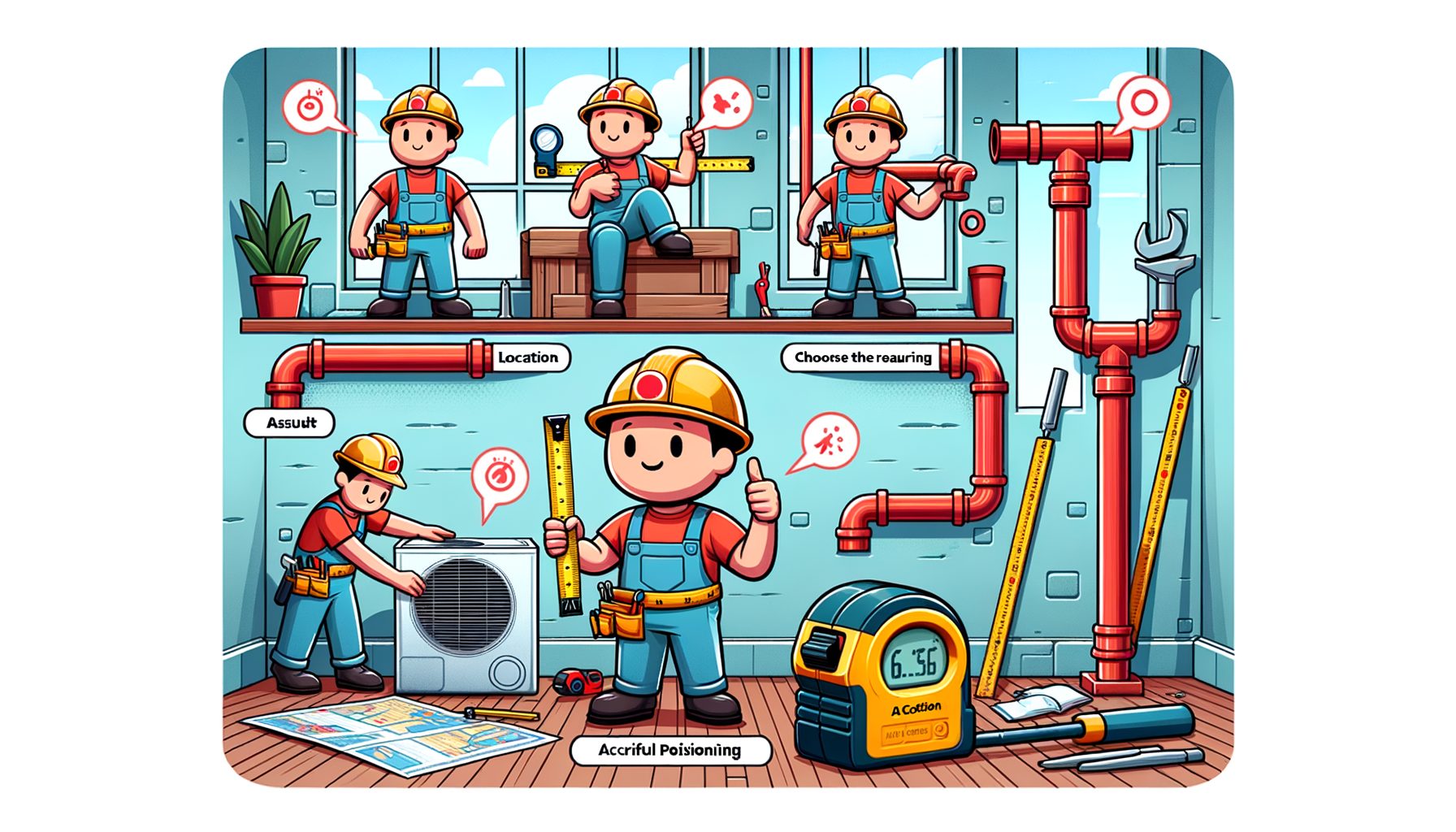
If your air conditioner loses performance, makes hissing sounds, or needs frequent refrigerant top-ups, the real culprit is often hidden in plain sight: the piping between the indoor and outdoor units. The AC piping installation guide below walks you through the proper steps to avoid leaks—from planning and material choices to pressure testing and commissioning—so your system runs efficiently and safely. Whether you’re a DIY enthusiast working under local rules or a new technician building best practices, the insights below will help you prevent costly callbacks, protect the environment, and keep your AC reliable in the hottest months.
Why AC Piping Leaks Happen: Pressure, Materials, and Small Mistakes
AC refrigerant lines work under significant pressure and temperature swings. Pressures get high. On a modern system using R410A, R32, or R454B, the high side can exceed 400 psi (27.6 bar) on hot days, while the low side and suction line can see heavy vibration and cold temperatures that cause contraction. Force all of that through copper tubing with joints, bends, and supports, and you have a setup where tiny errors inevitably become leaks over time.
Leaks are often traced to joints (flares and brazed connections), kinks from tight bends, and rubbed spots where tubing touches sharp edges or vibrates against walls. Flares tend to leak when preparation is poor: uneven cuts, over- or under-torqued nuts, or dirty mating surfaces. Brazed joints fail when overheated without nitrogen purge, creating internal oxidation (black scale) that flakes, blocks expansion valves, and weakens the joint. Contamination is another frequent cause—moisture or debris in the line can react with refrigerant and compressor oil to form acids, corroding copper from the inside out.
Thermal expansion and contraction add stress at fixed points, especially when tubing is tightly strapped without room to move. In long vertical risers, oil return becomes an issue; without proper traps (as per manufacturer guidance), oil puddles can starve the compressor, causing heat and vibration that stress joints. Left outdoors, insulation weathers quickly. Uncovered suction lines sweat, corrode supports, and invite pinholes if water sits against metal.
Testing and commissioning shortcuts are a silent leak factory. Skipping nitrogen pressure tests, rushing evacuation, using a manifold gauge instead of a micron gauge, or opening valves before a stable vacuum is achieved leads to micro-leaks and moisture ingress that show up weeks later. Well, here it is: use the right materials, respect bend radii and support spacing, flow nitrogen when brazing, torque flares to spec, test with nitrogen, and verify with a deep, stable vacuum. Every step matters because pressure, heat, and vibration will expose any weak link you leave behind.
Step-by-Step AC Piping Installation the Right Way
Good installations start before the tubing is even cut. Map a route that minimizes total length, vertical rises, and the number of joints. Avoid tight turns and sharp edges; if you must pass through metal, install grommets or sleeves so copper never rubs on a raw surface. As a rule of thumb, aim for a bend radius at least 4–6 times the tube diameter to prevent kinks and thinning.
Cut and prep the tubing correctly. Use a sharp tube cutter for a clean, square cut, then ream the inside to remove burrs. Keep tubing ends capped whenever they’re not being worked on to prevent dust and moisture from getting inside. If flaring, use a quality eccentric flaring tool, lightly lubricate the cone if allowed by the manufacturer, and face the flare smooth and even. Always match flare nuts to the equipment (do not reuse old nuts). If brazing, assemble the joint slightly spaced for capillary action, clean and fit firmly, and purge with low-flow nitrogen throughout the heat cycle to avoid internal oxidation.
Route and support lines with vibration in mind. Use properly sized insulated clamps or hangers—never zip-ties alone. Typical support spacing for small-diameter copper (6–16 mm OD / 1/4–5/8 in) is about every 1–1.5 meters (3–5 ft), closer near equipment where vibration is highest. Maintain consistent separation between suction and liquid lines, and insulate the suction line continuously, sealing every seam. Outdoors, protect insulation with a UV-rated jacket or paint to prevent cracking. Keep lines away from gutters or areas where water can pool.
Manage elevation changes properly. On long vertical risers, consult the manufacturer for oil traps and riser sizing; a common practice is an oil trap at the base and additional traps every 3–4 meters (10–13 ft) of rise, but always follow the model-specific guidance. For long runs, verify that the selected line sizes avoid excessive pressure drop and maintain oil return at the expected capacity and refrigerant type. Before commissioning, double-check torque on flare connections with a calibrated wrench using the manufacturer’s specs—over-tightening can crack flares as surely as under-tightening will leak.
To finish, seal wall penetrations with sleeves and weatherproof sealant to keep out pests and rain. Label line sets and route them neatly—clean work is not just cosmetic; it makes future diagnostics easier and reduces the chance of rub-outs. With the physical installation complete, you’re ready for pressure testing and evacuation—the two non-negotiable steps that prove whether your piping is leak-free.
Materials, Sizing, and Fittings That Prevent Leaks
Using the right materials is the fastest way to lower leak risk. For copper, choose ACR-grade, dehydrated, sealed-end tubing that meets ASTM B280 (or equivalent regional standard). That copper is cleaned and dehydrated at the factory and capped to keep moisture out. Soft-drawn lines are easier to route around obstacles, while hard-drawn lengths provide straighter runs for exposed areas. Match line sizes to the equipment capacity and refrigerant type; undersizing increases pressure drop and heat, oversizing can harm oil return and compressor life.
Insulation matters more than many realize. Closed-cell elastomeric insulation (often 10–19 mm / 3/8–3/4 in wall thickness, depending on climate and code) prevents condensation, energy loss, and corrosion. Seal all seams with approved adhesive or tape, and protect outdoor sections with UV-rated covers. For fittings, prefer long-radius bends and minimize flare connections outdoors where weather and vibration hit hardest. Where flares are required by the manufacturer, use matched flare nuts and a torque wrench; where permissible, brazed joints with nitrogen purge often provide the most robust, leak-resistant connections.
Choose brazing alloy appropriate to your metals. For copper-to-copper, a phosphorus-copper alloy (such as BCuP-5) is common and does not require flux. For copper-to-brass (e.g., service valves), consult manufacturer guidance; some joints may require silver-bearing alloys and flux formulated for HVAC use. Never use plumbing flux or solder—HVAC systems demand higher temperatures and cleaner interiors.
Well, here it is—a quick-reference table that reduces leak risk:
| Item | Recommendation | Why It Prevents Leaks | Notes/Standards |
|---|---|---|---|
| Copper tubing | ACR-grade, sealed-end, ASTM B280 | Dry, clean interior reduces corrosion and weak joints | ASTM B280 |
| Insulation | Closed-cell elastomeric, UV-protected outdoors | Prevents condensation, corrosion, and energy loss | Follow local code for thickness |
| Fittings | Minimize flares; nitrogen-brazed joints where allowed | Fewer mechanical joints; oxidation-free brazes | Nitrogen purge during heat |
| Supports | Insulated clamps every 1–1.5 m (3–5 ft) | Reduces vibration and rub-outs | Use isolation pads at equipment |
| Tools | Calibrated torque wrench and micron gauge | Correct flare torque and verified deep vacuum | Log values at startup |
Pair these materials with the manufacturer’s line-size charts and approved joint types. Many brands publish model-specific limits for total line length, vertical rise, and additional refrigerant charge per meter/foot. When in doubt, verify with the installation manual—it’s the quickest route to avoiding both leaks and performance issues.
Commissioning and Leak Verification: Tests You Should Never Skip
Pressure testing and evacuation are the make-or-break steps for a leak-free AC piping installation. After all mechanical joints are complete and accessible, perform a nitrogen pressure test. Start conservatively (for example, around 150 psi / 10 bar) and check with a soap solution or leak detector at every joint. If all is clear, raise pressure to the level recommended by the equipment manufacturer—commonly in the range of 300–450 psi (20–31 bar) for systems rated accordingly—and hold. A stable test for at least 1 hour on residential systems (longer for complex or long runs) without pressure drop is a strong indicator of tight piping. Temperature changes affect pressure, so record ambient temperature and compensate or perform a temperature-stabilized hold.
Use more than one method to confirm tightness. Bubble solution is excellent for finding pinpoint leaks at flares and valves. An electronic leak detector provides sensitivity around joints and service ports. If a leak shows, release nitrogen safely, repair the joint, and test again. Do not proceed until the system passes a full-pressure hold with no pressure decay attributable to leaks.
Next, evacuate the system with a clean, appropriately sized vacuum pump connected via large-diameter hoses, bypassing manifold hoses when possible to reduce flow restriction. Attach a digital micron gauge directly to the system (not to the pump). Pull down to at least 500 microns, then isolate the system and perform a standing vacuum test; a stable reading with minimal rise (for example, remaining below 800–1000 microns after 10–15 minutes, depending on ambient conditions and manufacturer guidance) indicates low moisture and no leaks. If the vacuum rises rapidly, look for leaks; if it rises slowly and plateaus high, moisture is likely—continue evacuation or perform a triple evacuation with a dry nitrogen break to absorb moisture.
Only after a successful vacuum should you open the service valves or weigh in the additional charge specified by the manufacturer for your line length. Commission the system by checking superheat and subcooling against the charging charts, verify supply/return temperatures, and listen for abnormal sounds that suggest vibration issues. Log all values—pressure test readings, vacuum levels, charge added, and final performance data. Doing so creates a traceable record that protects you and helps diagnose issues later.
Always comply with local regulations for refrigerant handling. In many regions, recovery, charging, and service require certification. For reference on refrigerant rules in the United States, see the EPA’s Section 608 program (epa.gov/section608). For broader safety and design context, review ASHRAE standards and guidelines (ashrae.org) and manufacturer installation resources such as Mitsubishi Electric’s technical library (mitsubishicomfort.com/resources). For a practical deep dive on nitrogen purging and evacuation techniques, HVAC School offers useful tutorials (hvacrschool.com).
Q&A: Fast Answers to Common AC Piping Questions
Q1: Are flare connections or brazed joints better?
It depends on the manufacturer. Many mini-splits require flares at the unit connections; elsewhere, brazed joints with nitrogen purge are typically more durable. If you use flares, prep perfectly and torque to the brand’s spec. If you braze, keep nitrogen flowing the entire time. Mixing methods outside the manual can void warranties and increase leak risk.
Q2: What vacuum level is “good enough” before opening valves?
As a practical target for most residential systems, achieve ≤500 microns, isolate, and ensure the vacuum holds with minimal rise over 10–15 minutes. Always use a dedicated micron gauge attached to the system. If your reading climbs quickly, find the leak; if it creeps up and stabilizes high, you likely have moisture—keep evacuating or perform a triple evacuation with a nitrogen break.
Q3: Can I reuse an old line set with a new unit?
Only if the manufacturer allows it and the lines are the correct size, clean, and in good condition. You must flush thoroughly (compatible solvent or manufacturer-approved method), verify no kinks or rub spots, replace insulation, and pressure test/evacuate as if new. Some refrigerants and oils are not compatible with residues from older systems, so consult the manual before reusing.
Q4: How often should I recheck for leaks after installation?
After a proper pressure test and evacuation, leaks are unlikely. Still, a good practice is to recheck within the first cooling season during a maintenance visit. Look for oil stains at joints, inspect insulation, and verify performance (superheat/subcooling). Annual maintenance helps catch early signs before they become expensive problems.
Conclusion: Seal the System, Save Money, and Breathe Easier
You’ve seen why leaks happen, how to install AC piping step by step, which materials and fittings cut risk, and the exact tests that prove a tight system. The common thread is simple: details win. Clean cuts, correct bends, nitrogen during brazing, proper supports, accurate torque on flares, a thorough nitrogen pressure test, and a verified deep vacuum—each action protects you from callbacks, wasted energy, and environmental harm.
Now it’s your move. If you’re planning an installation, turn this guide into a checklist: map your route, choose ASTM B280 ACR copper, protect insulation from UV, set support spacing, purge nitrogen when heating, pressure test in stages, and hold a vacuum that proves your work. If you manage teams, standardize these steps and log every test reading so quality becomes repeatable. And if you’re a homeowner, use this knowledge to hire smarter—ask about nitrogen purging, microns, and pressure holds before you sign.
Take one concrete step today: print a one-page “AC piping leak-prevention checklist” or save this article for your next job. Then this: review torque tools and micron gauge calibration. What’s interesting too—bookmark key references like ASHRAE guidelines and your brand’s installation manual. Small habits—formed now—pay off for years in cooler rooms, lower bills, and fewer headaches.
You deserve an AC system that just works. Build it right, test it right, and it will. Ready to make leak-free installs your new normal? What’s the one habit from this guide you’ll start using on your very next job?
Sources and Further Reading
– ASHRAE Standards and Guidelines: ashrae.org/technical-resources/standards-and-guidelines
– U.S. EPA Section 608 Refrigerant Management: epa.gov/section608
– ASTM B280 ACR Copper Tubing: copper.org/applications/plumbing/techref/astm_b280.html
– HVAC School (Nitrogen Purging and Evacuation Techniques): hvacrschool.com
– Mitsubishi Electric Installation Resources: mitsubishicomfort.com/resources