
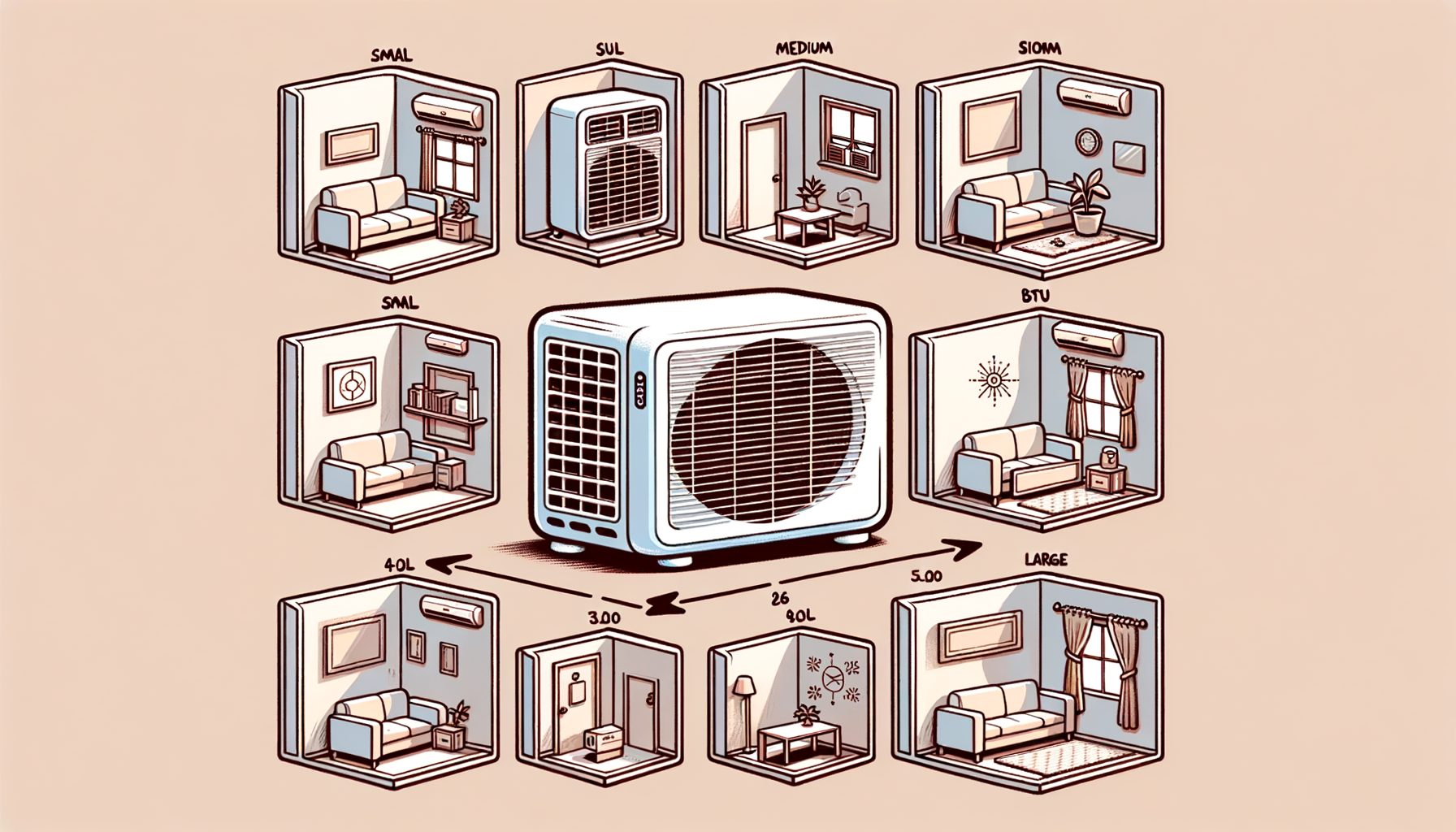
Picking an air conditioner feels easy—until you hit a tangle of sizes, specs, and acronyms. Choose too small and you’ll roast through summer; choose too large and you’ll get a clammy cave, noisy short cycling, and inflated bills. The key variable for comfort and efficiency is Air Conditioner BTU (British Thermal Units), a measure of cooling horsepower. In the next few minutes, you’ll see how to size BTU by room area, tweak it for climate and lifestyle, and dodge the priciest sizing mistakes. By the end, you’ll size like a pro and feel the payoff on day one.
What BTU Really Means—and Why Sizing Is Everything
BTU—short for British Thermal Unit—measures heat. In cooling, BTU per hour (BTU/h) tells you how much heat an AC can pull from a room each hour. Higher BTU means more capacity. But bigger isn’t automatically better. Oversized units chill air fast yet fail to run long enough to dry the air, leaving you with damp cold, fogged windows, and musty odors. Undersized units grind away constantly, miss setpoint, and waste energy while you stay uncomfortable. Either error shortens equipment life and bumps up bills.
Here’s a quick map: 1 ton of cooling equals 12,000 BTU/h, and 1 kW of cooling equals about 3,412 BTU/h. Some regions list capacity in kilowatts (kW), others use BTU or tons. Converting is simple: BTU/h ÷ 3,412 = kW. Example: a “1‑ton” unit (12,000 BTU/h) is roughly 3.52 kW.
Sizing affects more than comfort. Ratings like EER, SEER, or SEER2 only hit their promised savings when the system is sized and installed properly. Oversized systems short‑cycle and never reach their efficiency sweet spot. Undersized systems run flat out during peak hours, which can sting if your utility charges time‑of‑use rates. In countless HVAC audits, right‑sizing delivers the biggest instant comfort upgrade—often more than switching to a premium brand. Expect steadier temperatures, better dehumidification, quieter operation, and longer runtimes that actually help efficiency.
Bottom line: BTU isn’t about chasing the most powerful unit. It’s about matching your room’s heat load—driven by area, ceiling height, insulation, sun, people, appliances, and climate. Nail the match and you’ll get lower bills, cleaner indoor air, and equipment that lasts longer with fewer repairs.
How to Calculate the Right BTU by Room Size (Imperial and Metric)
Area is the fastest way to estimate. A common baseline is about 20 BTU per square foot (ft²), which equates to roughly 215 BTU per square meter (m²). In metric power, that’s approximately 60–70 watts per m² for typical residential rooms with 8 ft (2.44 m) ceilings and average insulation.
Step‑by‑step:
1) Measure the room. Length × width = area. Example: 12 ft × 15 ft = 180 ft² (≈ 16.7 m²). Metric example: 4.0 m × 3.5 m = 14 m².
2) Apply the baseline. Multiply area by 20 BTU/ft². For 180 ft², that’s 3,600 BTU/h. In metric, multiply area by ~215 BTU/m² or use ~65 W/m² and convert watts to BTU/h (W × 3.412).
3) Adjust for real‑world factors (coming next): sun, insulation, ceiling height, people, and usage (kitchens, gaming rigs, etc.).
4) Round to standard sizes. Common capacities: 5,000; 6,000; 8,000; 10,000; 12,000; 14,000; 18,000; and 24,000 BTU/h. Choose the nearest fit after your adjustments.
Rule‑of‑thumb examples:
– Small bedroom (100–150 ft² / 9–14 m²): 2,000–3,000 BTU/h base. Many buyers round up to 5,000–6,000 BTU/h to cover sun and electronics.
– Medium living room (300–400 ft² / 28–37 m²): 6,000–8,000 BTU/h base. With adjustments, 10,000–12,000 BTU/h is common.
– Large open‑plan space (600–800 ft² / 56–74 m²): 12,000–16,000 BTU/h base. Tall ceilings and big windows often push you to 18,000–24,000 BTU/h.
Use the table below to convert area to base BTU and kW, then apply adjustments. Values assume 8 ft (2.44 m) ceilings and average insulation.
| Area (ft²) | Area (m²) | Base BTU/h | Approx kW | Typical Use |
|---|---|---|---|---|
| 100 | 9.3 | 2,000 | 0.59 | Small bedroom, home office |
| 150 | 13.9 | 3,000 | 0.88 | Bedroom, nursery |
| 200 | 18.6 | 4,000 | 1.17 | Bedroom, compact studio |
| 250 | 23.2 | 5,000 | 1.47 | Bedroom, small living area |
| 300 | 27.9 | 6,000 | 1.76 | Living room |
| 350 | 32.5 | 7,000 | 2.05 | Living room, large bedroom |
| 400 | 37.2 | 8,000 | 2.35 | Living/dining combo |
| 450 | 41.8 | 9,000 | 2.64 | Open plan zone |
| 500 | 46.5 | 10,000 | 2.93 | Open plan, media room |
| 600 | 55.7 | 12,000 | 3.52 | Large living area |
| 700 | 65.0 | 14,000 | 4.10 | Large open plan |
| 800 | 74.3 | 16,000 | 4.69 | Very large room |
Walk‑through example: A 12 × 15 ft room is 180 ft². Base load: 180 × 20 = 3,600 BTU/h. It faces west (afternoon sun), has two regular occupants, and 9 ft ceilings. Add sun (+10%), taller ceilings (9/8 = +12.5%), and one extra occupant (+600 BTU). New estimate: 3,600 × 1.225 ≈ 4,410 BTU + 600 ≈ 5,010 BTU. Round to a 5,000–6,000 BTU/h unit. Heavy electronics or hot, humid climates justify rounding to 6,000–8,000 BTU/h for better comfort.
For whole‑home systems, pros rely on Manual J (U.S.) or similar methods. For single rooms, an area‑based approach with targeted adjustments is accurate enough for most households and far superior to guessing.
Smart Adjustments: Sun, Climate, Ceilings, Insulation, People, and Appliances
Start with the base, then tune for the way you live. These practical tweaks add or subtract from the baseline:
Sun exposure: Intense afternoon sun? Add about +10% to +15%. Heavily shaded most of the day? Subtract −10%. Large south‑ or west‑facing windows push you toward the higher adders, especially without low‑E glass or blinds.
Climate zone: Hotter or more humid areas raise loads. In very humid regions, longer runtimes improve moisture removal, so avoid oversizing. Design temperatures well above average may call for +10–20% capacity or an inverter system that can ramp up on peak days. Cooler climates can stick to the baseline or go −10% in shaded, well‑insulated rooms. City‑specific data lives in ASHRAE climate normals and design temps.
Ceiling height: The baseline assumes 8 ft (2.44 m). Scale with height. Example: 10 ft ceilings → multiply by 10/8 = +25%. Cathedral ceilings with skylights may need even more due to solar gain.
Insulation and air sealing: Poor insulation, leaky windows, and air gaps increase load. Older or drafty spaces may need +10–20%. Tight, modern construction can permit −10%. Simple fixes—weatherstripping, sealing around AC sleeves, thermal curtains—lower BTU needs and boost comfort.
Occupancy: The baseline assumes one person. Add ~600 BTU/h for each additional regular occupant. A gaming setup or home studio with multiple monitors and PCs can add 500–1,000 BTU/h or more. Kitchens are special: add roughly +4,000 BTU/h for cooking heat, especially if ovens or gas ranges run often.
Humidity control: Oversizing hurts dehumidification because the system short‑cycles. In tropical or coastal climates, prioritize right‑sizing or pick an inverter (variable speed) that can run longer at low output to wring out moisture. Aim for 40–60% indoor relative humidity.
Windows and glazing: Single‑pane windows can spike heat gain. If replacements aren’t in the budget, add shading (blinds, films, awnings) and consider +10% BTU for rooms with large, sun‑exposed glass.
Real‑life example: A 350 ft² living room with 9 ft ceilings, west‑facing windows, two occupants, and a game console. Base: 7,000 BTU/h. Ceilings: ×1.125 → 7,875. Sun: +10% → 8,663. Extra occupant: +600 → 9,263. Electronics: +500 → 9,763. Rounded: 10,000–12,000 BTU/h. In humid climates, favor a 12,000 BTU/h inverter for moisture control without blasting air.
Pro tip: When multiple adders stack up (tall ceilings + sun + people + electronics), a ductless inverter mini‑split shines. It modulates capacity, curbs short‑cycling, and stays quiet and efficient across conditions.
Which System Type Fits Your BTU Target? Window, Portable, Ductless, or Central
Every AC style delivers capacity differently. Pick the format that suits your space, budget, and flexibility:
Window AC: Affordable, compact, widely available from 5,000–14,000 BTU/h. Installs in a window or through‑the‑wall sleeve. Great for bedrooms and small living rooms. Seek Energy Star models and low noise for sleep areas. Trade‑offs: less daylight, more noise than splits, and often seasonal install/removal.
Portable AC: Convenience wins; efficiency doesn’t. Capacities mirror window units, but effective cooling is lower thanks to duct losses and infiltration. Dual‑hose beats single‑hose. Use when windows can’t hold a window AC or in rentals with restrictions. Expect higher noise and power draw for the labeled BTU.
Ductless mini‑split (inverter): Quiet and highly efficient, typically ~9,000 to 36,000 BTU/h (and beyond). Inverter compressors modulate to match load, improving comfort and dehumidification while cutting bills. Ideal for tricky rooms (sun, occupancy) and multi‑room setups. Upfront cost is higher, but lifetime cost often falls thanks to superior SEER/SEER2.
Central or ducted systems: Best for whole‑home comfort. Sizing is in tons (1 ton = 12,000 BTU/h) and requires ductwork plus a professional Manual J load calculation. Leaky or poorly insulated ducts reduce real‑world capacity and efficiency. For additions or a single hot zone, a dedicated ductless head can outperform upsizing the main system.
Efficiency markers to watch: EER (steady‑state) and SEER/SEER2 (seasonal). Many regions now cite SEER2; higher is better. Between similar BTUs, an inverter with a higher SEER2 usually feels more comfortable and costs less to run, especially when the weather swings.
Noise matters, too. A bedroom at 38–45 dB is worlds apart from 55+ dB. Window and portable units publish decibel ratings; mini‑splits are typically the quiet champs. If you sleep or work near the unit, quiet plus right‑sized BTU equals a better day.
Placement, Installation, and Maintenance: Hidden Factors That Change Effective BTU
Even a perfectly sized unit can underperform with poor installation or care. Protect your investment with the following:
Airflow and placement: Aim the airflow across the room, not into a corner. Don’t bury window or portable units behind curtains or furniture. For mini‑splits, mount the indoor head high with a clear throw. Direct air along the longest room dimension for even cooling.
Heat sources: Keep units away from lamps, TVs, ovens, and direct sun when possible. A temperature sensor “seeing” extra heat will overcool and short‑cycle, wasting energy and comfort.
Outdoor clearance: For condensers (ductless or central), maintain clearances on all sides and above. Starved airflow slashes capacity and efficiency. Provide shade if you can, but leave room to breathe.
Sealing and drainage: Seal gaps around windows or wall sleeves to block hot infiltration. Ensure condensate drains freely; clogs reduce performance and can cause water damage or odors.
Filter and coil care: Dirty filters and coils can chop capacity by 10–30%. Clean or replace filters monthly during peak season; rinse washable filters and let them dry fully. Have coils inspected and cleaned annually if airflow drops, icing appears, or energy use climbs.
Thermostat settings: Many homes land happily at 24–26°C (75–78°F). Use “dry” or “dehumidify” modes in humid climates if offered. Avoid big setpoint swings; steady operation helps humidity control and equipment life.
Doors and zoning: Close doors strategically to contain the cooled zone, but don’t choke return airflow. In open plans, use fans to distribute cool air. Ceiling fans don’t lower air temperature, yet they make you feel 2–3°C cooler—letting you raise the setpoint for the same comfort.
Utility and tariffs: Time‑of‑use pricing? Pre‑cool before peaks and maintain during peak windows. Inverter systems excel at this “cruise control.”
Result: The right BTU, placed wisely and maintained simply, transforms how your space feels, extends equipment life, and trims your bill without sacrificing comfort.
Quick Q&A: Common BTU Sizing Questions
Q: How many BTUs do I need for a 12 × 12 ft room?
A: That’s 144 ft². Base load: 144 × 20 = 2,880 BTU/h. After sun/people/ceiling adjustments, most folks choose 5,000–6,000 BTU/h for real‑world comfort.
Q: Is a bigger AC always better?
A: Not at all. Oversized units cool quickly but don’t dehumidify well, leaving rooms cold and clammy. Go for right‑sized, or choose an inverter that modulates.
Q: What’s the difference between BTU and tons?
A: 1 ton = 12,000 BTU/h ≈ 3.52 kW. Small rooms use 5,000–12,000 BTU/h; whole homes are sized in tons with pro calculations.
Q: How do I convert BTU to kW?
A: kW = BTU/h ÷ 3,412. Examples: 9,000 BTU/h ≈ 2.64 kW; 12,000 BTU/h ≈ 3.52 kW.
Q: Should I get an inverter (variable‑speed) system?
A: If the budget allows, yes—especially for humid climates, mixed‑use rooms, or variable weather. Inverters track the load closely, boosting comfort and saving energy.
Conclusion: Size It Right, Feel the Difference, Save All Season
Buying an AC isn’t about guessing or grabbing the biggest box. It’s about matching capacity to your room and routine. You’ve now seen how Air Conditioner BTU translates to comfort and lower bills, how to set a solid base from area (about 20 BTU/ft² or 215 BTU/m²), and how to dial in adjustments for sun, climate, ceiling height, insulation, people, and appliances. You also learned how unit type—window, portable, ductless mini‑split, or central—changes how capacity feels day to day, and why installation and maintenance can make or break performance.
Your move: Measure the room, compute the area, apply the base BTU, then layer the adjustments that fit your reality. Use the table above to choose a practical size and, if you’re between sizes or live with high humidity, consider an inverter for smoother comfort and better moisture control. Before you purchase, compare efficiency ratings (SEER/SEER2, EER), check noise levels for bedrooms, and plan for solid placement and sealing. A few extra minutes now pay back in quieter nights, drier air, and lower costs all summer.
Call to action: Size your room today, shortlist 2–3 models that match your BTU target and efficiency goals, and schedule installation before the hottest week arrives. For multi‑room projects or any uncertainty, ask a local pro for a Manual J estimate and discuss ductless options for tricky spaces. Future you—cool, comfortable, and unbothered by the power bill—will be glad you did.
You deserve reliable comfort without compromise. Start with the right BTU, install with care, maintain it simply, and enjoy a home that feels balanced and calm. Ready to measure and pick your perfect size—what’s the first space you’ll fix?
Helpful resources and further reading:
– U.S. Department of Energy: Room Air Conditioners (sizing and efficiency): energy.gov/energysaver/room-air-conditioners
– ENERGY STAR guidance for room ACs: energystar.gov/products/room_air_conditioners
– ASHRAE climate data (design temps, weather files): ashrae-meteo.info
– ACCA Manual J (professional load calculations): acca.org/standards/technical-manuals/manual-j
– AHRI on SEER2 standards: ahrinet.org/SEER2
Sources:
– U.S. Department of Energy. Room Air Conditioners. energy.gov
– ENERGY STAR. Room Air Conditioners. energystar.gov
– ASHRAE Climate Data and Design Conditions. ashrae-meteo.info
– Air-Conditioning, Heating, and Refrigeration Institute (AHRI). SEER2 resources. ahrinet.org
– Air Conditioning Contractors of America (ACCA). Manual J Residential Load Calculation. acca.org