
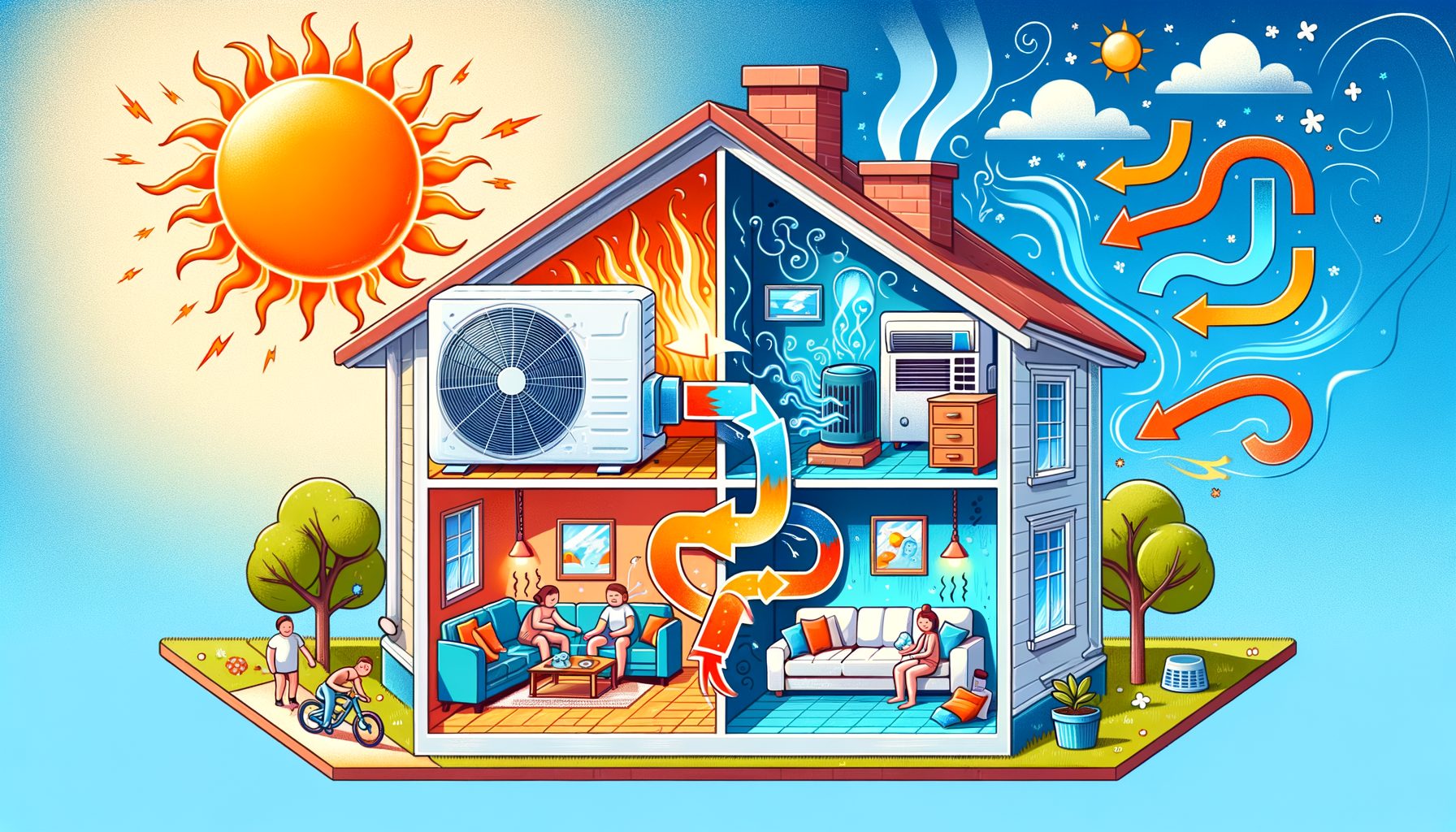
We all know the feeling: it’s sweltering outside, your room feels sticky, and your focus disappears. An air conditioner steps in to cool and dehumidify your space so you can sleep, work, and live comfortably. But what exactly is an air conditioner, how does it work, and how can you choose and use one to stay cool without shocking your power bill? The guide below breaks down the science, the options, and the smart moves—so your home stays chill, your energy use stays sensible, and your comfort skyrockets.
Why Heat Feels So Hard—and How an Air Conditioner Actually Helps
The main problem for most households isn’t just temperature; it’s the combination of heat, humidity, and uneven air movement. When humidity is high, sweat doesn’t evaporate efficiently, so your body struggles to cool itself. That’s why a humid 29°C (84°F) can feel worse than a dry 32°C (90°F). Comfort experts, including those behind ASHRAE Standard 55, emphasize that true comfort depends on air temperature, humidity, airflow, and even clothing—your AC influences all of these at once by cooling, dehumidifying, and circulating air. In other words, an air conditioner isn’t merely a cold-air machine; it’s a comfort system.
Zoom out and a bigger picture comes into view: extreme heat is becoming more common in many regions, especially in cities where pavement traps warmth (the “urban heat island” effect). For people working from home, students studying for exams, or families caring for infants or older adults, a hot home is more than inconvenient—it can be risky. Reliable cooling helps reduce heat stress, improve sleep quality, and keep indoor humidity in a healthier range that discourages mold growth.
Then there’s the budget angle. Cooling can be one of the largest energy uses in summer. The International Energy Agency notes that space cooling already accounts for a significant share of global electricity demand, and demand is rising as incomes grow and summers get hotter. That doesn’t mean you have to accept sky-high bills. Efficient equipment, right-sized capacity, and good habits can shrink your energy use without sacrificing comfort. Treat your air conditioner like a tool: choose wisely, set it up correctly, maintain it well, and comfort can be delivered without blowing the budget.
Bottom line: the problem AC solves is bigger than “hot rooms.” It manages heat, humidity, and airflow—factors that directly affect your health, productivity, and energy budget. Understanding that sets you up to make better decisions about the system you buy and how you run it.
How an Air Conditioner Works: The Refrigeration Cycle, Made Easy
At its core, an air conditioner is a heat mover. It doesn’t “create cold.” Instead, it transfers heat from inside your home to the outdoors using a closed loop of refrigerant. The loop cycles through four main components that work together to grab heat indoors and dump it outside.
Well, here it is: the cycle in plain language.
- Evaporator (indoor coil): Warm indoor air passes over a cold coil filled with liquid refrigerant. The refrigerant absorbs heat and evaporates into a gas. As the coil soaks up heat, the air blowing past it cools down. Moisture in the air condenses on the cold coil and drains away—that’s the dehumidification step.
- Compressor: The gaseous refrigerant flows outside to the compressor, which pressurizes it. Compressing the gas raises its temperature dramatically, priming it to release heat in the next step.
- Condenser (outdoor coil): The hot, high-pressure gas flows through the outdoor coil. A fan blows outdoor air across the coil, and the refrigerant releases its heat to the outside air. As it cools, it condenses back into a liquid. Heat is expelled to the outdoors.
- Expansion device: The liquid refrigerant is forced through an expansion valve (or orifice), which drops its pressure and temperature, turning it back into a cold, low-pressure liquid ready to return to the indoor coil. The cycle then repeats.
Think of the refrigerant as a “heat courier,” constantly picking up heat indoors and delivering it outdoors. That’s why you feel warm air blowing from the outdoor unit—your AC is literally dumping your indoor heat outside.
Modern systems often use inverter (variable-speed) compressors that can ramp up or down based on demand. Instead of blasting on/off at full power, they modulate to hold a steady temperature and humidity. Fewer temperature swings, quieter operation, and better efficiency are the usual results—especially during mild conditions.
What about refrigerants? Older systems used R-22; many current systems use R-410A or R-32. Global policy is pushing a phasedown of high-GWP (global warming potential) refrigerants, so newer ACs increasingly use lower-GWP options. If you’re buying new, ask the installer which refrigerant the system uses and how easy it is to service. For safety and environmental reasons, refrigerant handling should be done by licensed technicians, and any leaks should be fixed promptly.
Bonus: A heat pump is essentially an air conditioner with a reversible valve. In cooling mode, it works exactly like an AC. In heating mode, it flips direction and moves heat from outside to inside—even in surprisingly cold weather—making it a year-round comfort solution in many climates.
Choosing, Sizing, Using, and Maintaining Your AC for Maximum Comfort and Minimum Cost
Selecting the right system is a mix of space, climate, budget, and efficiency. Navigate the options with the pointers below and run them smartly.
System types and where they shine:
- Window AC: Affordable, quick to install for a single room. Good for renters and small spaces. Check the window’s size and weight capacity.
- Portable AC: Flexible placement but typically less efficient; requires venting hot air through a window. Works when a window unit isn’t allowed.
- Mini-split (ductless) heat pump: High efficiency, quiet, and zoned cooling for one or several rooms without ductwork. Great for additions, apartments, or homes upgrading room by room.
- Central (ducted) AC or heat pump: Whole-home comfort with discreet vents. Best when ducts are well-designed and sealed; pairs well with smart thermostats and filtration.
Size matters—A lot. An undersized unit runs constantly and still can’t keep up; an oversized one cools too fast without removing enough humidity, leaving you cold and clammy. For room ACs, a rough starting point is about 20 BTU per square foot (adjust for high ceilings, sun exposure, occupancy, and appliances). For whole homes, professionals use a Manual J load calculation to account for insulation, windows, orientation, and local climate. Ask for this by name to avoid guesswork.
Understanding efficiency labels helps you compare:
- SEER or SEER2 (seasonal efficiency): Higher is better for cooling season energy use.
- EER (steady-state efficiency at a specific outdoor temperature): Useful for hot climates.
- COP (coefficient of performance, mostly used with heat pumps): Higher means more cooling per unit of electricity.
Variable-speed (inverter) technology usually improves comfort and efficiency by matching output to the moment. ENERGY STAR–certified units meet stricter efficiency and performance criteria, and many regions offer rebates for them.
What could efficiency mean in real energy terms? Here’s a simplified example showing how seasonal efficiency translates to electricity use. The math uses the SEER2 definition (BTU per watt-hour):
| Scenario | Seasonal Cooling Load (BTU) | SEER2 | Estimated Energy (kWh) | Approx. Savings |
|---|---|---|---|---|
| 1.0 ton room/mini-split over 600 cooling hours | 12,000 BTU/h × 600 = 7,200,000 | 15 | 7,200,000 ÷ 15 ÷ 1000 = 480 kWh | — |
| Same load with higher efficiency | 7,200,000 | 20 | 7,200,000 ÷ 20 ÷ 1000 = 360 kWh | 120 kWh saved (≈25%) |
Operation tips that really work:
- Set a realistic temperature: Around 24–26°C (75–78°F) balances comfort and cost for many homes. Each degree tighter can raise energy use.
- Use “Dry” (dehumidify) mode on humid days if your AC has it; it may feel more comfortable at a slightly higher temperature.
- Run ceiling fans to enhance perceived coolness; you can raise the thermostat and feel just as comfortable. Turn fans off when you leave the room.
- Shade windows and reduce midday heat gain with blinds or reflective films; seal air leaks to keep cool air inside.
- Program or schedule temperature changes. Increasing your setpoint when you’re away can cut cooling costs; the U.S. Department of Energy suggests that strategic setbacks can save up to about 10% annually on heating and cooling combined, depending on your climate and home.
Maintenance = performance:
- Clean or replace filters regularly (often monthly during heavy use). Better airflow means better efficiency and less strain on the compressor. Many systems work well with MERV 8–13 filters; check your unit’s specs.
- Keep outdoor coils clear of debris and vegetation; maintain at least 60 cm (2 feet) of clearance for airflow.
- Flush or clear the condensate drain to prevent water damage and microbial growth.
- Have a pro check refrigerant levels, electrical connections, and overall operation yearly—especially before peak season.
- If you have ducts, seal leaks and insulate; leaky ducts can waste significant cooling energy before it ever reaches rooms.
Buying checklist (quick wins): choose the right type for your space, insist on proper sizing (Manual J for whole-home), prefer inverter/variable-speed when possible, look for ENERGY STAR or regional efficiency labels, and plan for filter access and routine maintenance. Quieter operation, lower bills, and consistently better comfort are the likely outcomes.
Useful resources for deeper dives and rebates: the U.S. Department of Energy’s Energy Saver pages explain cooling strategies and thermostat tips, ENERGY STAR offers buyer guides and product lists, and the IEA provides global context on cooling demand and efficiency trends. Links below can get you started.
FAQ: Fast Answers to Common Air Conditioner Questions
Q: What’s the difference between an air conditioner and a heat pump?
A: In cooling mode, they’re essentially the same. A heat pump can reverse the refrigeration cycle to provide heating too. If your winters are mild to moderate—or you want to decarbonize home heating over time—a heat pump can handle both seasons with a single system.
Q: How do I know what size AC I need?
A: For a single room, start with area-based rules (around 20 BTU per square foot) and adjust for sun exposure, ceiling height, and occupancy. For an entire home, request a professional Manual J load calculation. It accounts for insulation, windows, and climate—key factors that rule-of-thumb sizing often misses.
Q: What temperature should I set in summer?
A: Many households find 24–26°C (75–78°F) comfortable. If it feels warm, try running a fan to improve perceived coolness or lowering humidity with “Dry” mode. Small setpoint changes can significantly affect energy use, so experiment to find your personal sweet spot.
Q: Do air conditioners improve indoor air quality?
A: Yes, in several ways. They filter airborne particles (depending on your filter rating), reduce humidity (which can help discourage mold), and keep air moving. To boost results, use a quality filter your system can handle (often MERV 8–13), change it regularly, and consider dedicated ventilation if your home is very tight.
Q: Are portable air conditioners worth it?
A: They’re helpful when you can’t install a window or mini-split unit, but many models are less efficient and louder. If you rent or only need occasional spot cooling, they’re a flexible stopgap. If you own your space and need steady cooling, a window unit or mini-split usually offers better comfort per watt.
Conclusion: Stay Cool, Spend Less, and Breathe Easier
Here’s the short version: an air conditioner moves heat out of your home while lowering humidity, making hot days livable and nights restful. You’ve learned how the refrigeration cycle works, why sizing and efficiency matter, and which system types fit different spaces and budgets. You’ve also seen how simple habits—smart setpoints, shading, airflow, and filter care—can turn a decent setup into a great one.
So what should you do next? Start with a quick home check: note where heat builds up, test different setpoints to balance comfort and cost, and clean your filter. If you’re shopping, match the system to your space (window, portable, mini-split, or central), insist on proper sizing (Manual J for whole-home), and prioritize inverter/variable-speed technology plus a strong efficiency rating (SEER2, EER, ENERGY STAR). Already own a system? Schedule preseason maintenance, clear your outdoor unit’s space, and seal any obvious leaks around windows and ducts. Then use your thermostat’s scheduling to reduce cooling when you’re away.
These steps aren’t about perfection—they’re about momentum. Every smart choice stacks up: fewer temperature swings, better sleep, cleaner air, and lower bills. And the payoff is immediate; the difference can be felt tonight when your room reaches that just-right sweet spot without the system constantly cycling on and off.
If this guide helped, take action today: pick one upgrade (clean the filter, adjust the schedule, or add window shading) and set a reminder for the rest. Share this article with a friend who’s battling summer heat, and bookmark the resources below for rebates and deeper tips. Comfort is not a luxury; with the right air conditioner and a few smart habits, it’s a daily standard you can rely on. What’s the first tweak you’ll make to keep your place cooler and your energy use smarter?
Helpful outbound links:
U.S. DOE Energy Saver: Room Air Conditioners
U.S. DOE Energy Saver: Central Air Conditioning
ENERGY STAR: Central Air Conditioners
ENERGY STAR: Room Air Conditioners
U.S. EPA: Refrigerants and the SNAP Program
ASHRAE Standard 55: Thermal Environmental Conditions for Human Occupancy
Article sources:
U.S. Department of Energy – Energy Saver (Cooling and Thermostats): https://www.energy.gov/energysaver
ENERGY STAR (Product criteria and buying guides): https://www.energystar.gov
U.S. Environmental Protection Agency – Refrigerants and HFC Phasedown: https://www.epa.gov/snap
International Energy Agency – The Future of Cooling: https://www.iea.org/reports/the-future-of-cooling
ASHRAE – Thermal Comfort (Standard 55): https://www.ashrae.org/technical-resources/standards-and-guidelines/standards-addenda/standard-55